
Number plate visibility at night: reflectivity, lamps and care
Check reflective plate backgrounds, rear number plate lamps and the simple cleaning and condition checks that keep a registration visible after dark.
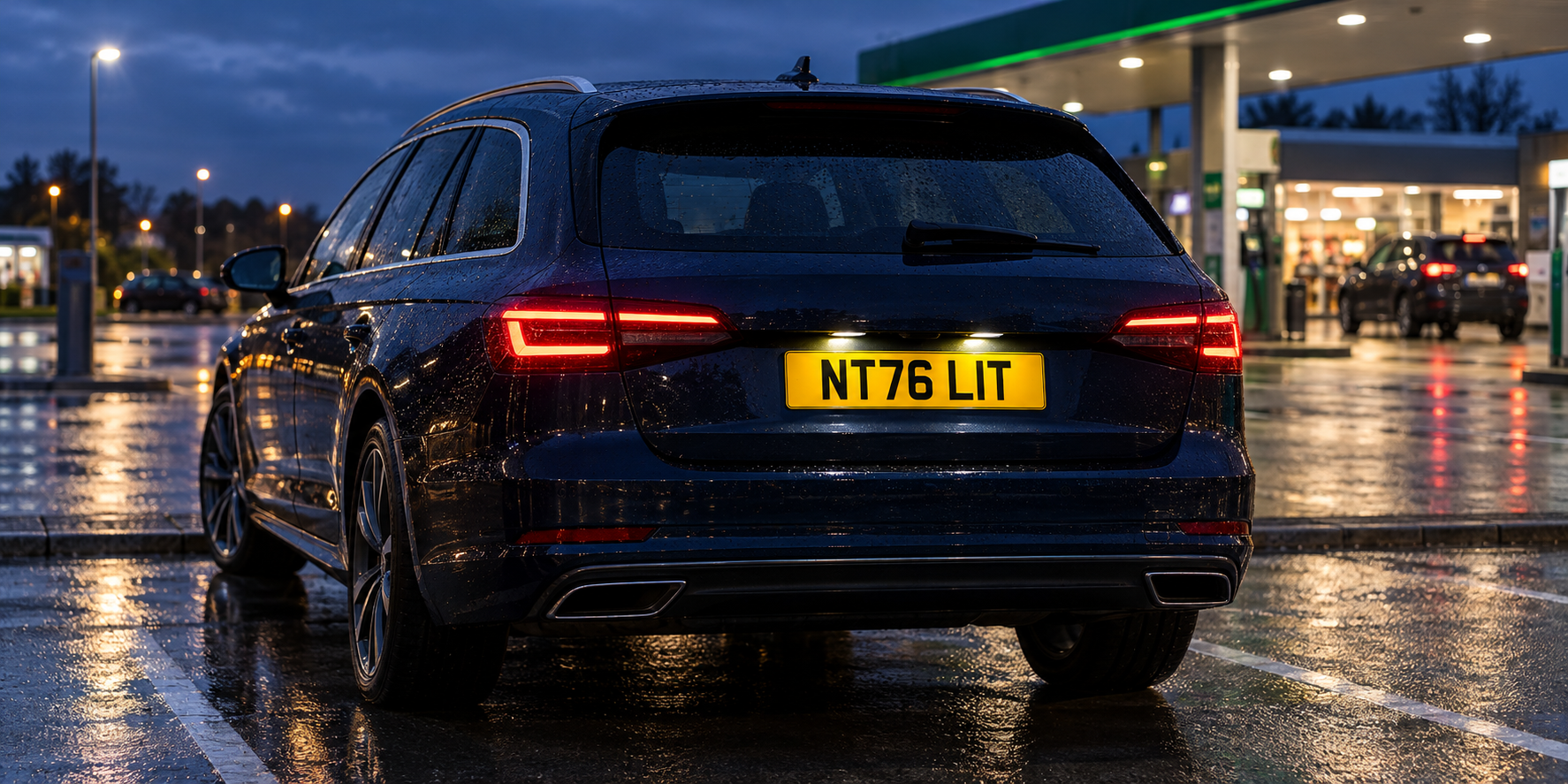
The background reflects, not the characters
GOV.UK says vehicle number plates must be made from reflective material, with black characters on a white front plate and a yellow rear plate. The background must not contain a pattern, while the characters themselves must not be reflective.
Reflectivity helps the plate remain visible when light reaches it, but it does not replace the correct colours, lettering, spacing or required markings. A tinted cover, film or decorative background can also interfere with the clear contrast needed to read the registration.
The rear plate needs its own lamps
The vehicle's rear registration plate lamps are separate from the plate. The current DVSA MOT manual says they must illuminate the rear registration plate and operate at the same time as the position lamps.
If a vehicle has only one rear registration plate lamp and it is not working, or if all fitted lamps are out, the manual lists that as a major defect. Where two or more lamps or light sources are fitted, one missing or inoperative source is listed as a minor defect. A lamp likely to become detached is a major defect.
Do a quick check after dark
Park safely, switch on the position lamps and walk behind the vehicle. Check that the whole rear registration can be read evenly, without a dark section caused by a failed lamp or dirt on a lens. The lamps should light the plate rather than throw direct white light backwards.
Check the front plate under normal light as well. Its reflective white background should be clean and unobstructed, and every character should remain clear from a normal viewing position. Ask another person to operate the lights if that makes the check safer.
Keep dirt, damage and fixings out of the way
Autumn rain, road spray and winter grime can quickly dull the plate and its lamps. Wash the plate with water, mild car shampoo and a soft cloth, then clean the lamp lenses gently. Avoid abrasive pads, harsh solvents and close pressure-washer use around plate layers or raised lettering.
DVSA guidance says registration plates must not be obscured, excessively damaged, deteriorated or delaminated. A fixing must not change the appearance or legibility of a character, so check screws, caps and holders as well as the plate face.
Know when to replace the plate
Cleaning will not repair a cracked, peeling, faded or delaminated plate. If damage still affects the registration or reflective background after cleaning, replace the plate rather than covering the fault with a film or accessory.
Choose Road Legal in the Vista builder for a replacement intended for public-road use. Select the correct front, rear or pair option, then review the size, lettering, badge, border and fixings before checkout. The number plate lamps belong to the vehicle and should be repaired separately if they do not work. Official guidance checked on 19 October 2026; the current DVSA MOT manual was updated on 14 October 2026.
- Check the rear plate lamps with the position lamps switched on.
- Clean both the plate face and the lamp lenses.
- Keep covers, holders and fixings clear of every character.
- Replace damage that cleaning cannot resolve.
- Select the correct front, rear or pair option before ordering.