
Winter number plate care: snow, ice and road salt
Keep your registration visible through winter with a practical pre-drive check and gentle cleaning routine for snow, frost, salt and road grime.
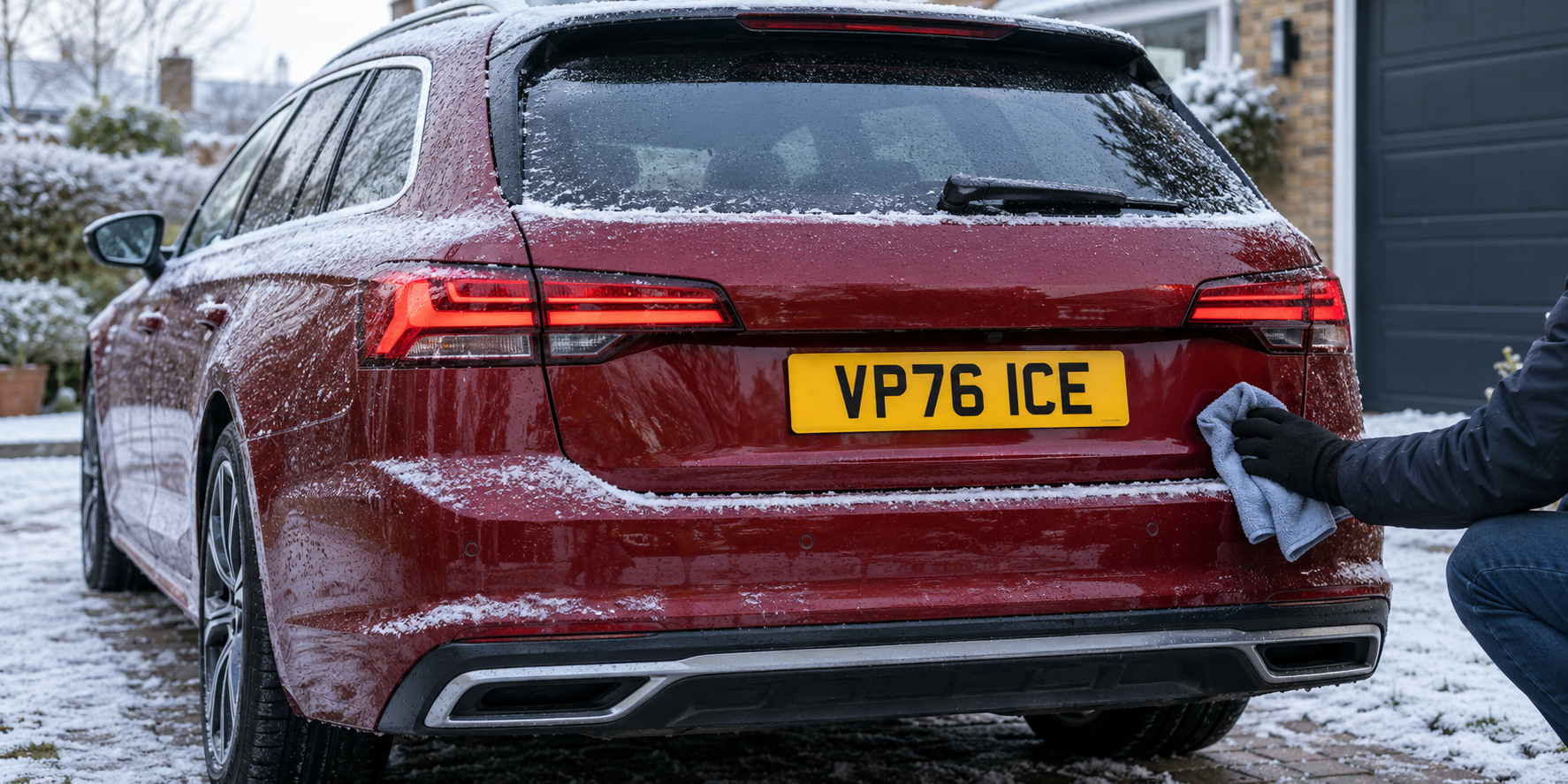
Clear both plates before setting off
Snow, slush and road spray can cover a registration quickly. The Highway Code says that before setting off in snow or ice, you must make sure the vehicle's lights are clean and its number plates are clearly visible and legible.
Walk around the vehicle and read the complete registration on the front and rear plates. Clear the corners and lower edge as well as the main characters, then check again after driving through heavy spray or falling snow when it is safe to stop.
- Check the front and rear plates before every winter journey.
- Clear every character and the full reflective background.
- Recheck after heavy road spray or snowfall when safely parked.
Remove grit before wiping
Do not grind dry road salt or grit across the plate face. Brush away loose snow gently, then use clean water to loosen dirt before wiping with a soft cloth or wash mitt and mild car shampoo.
Work around raised characters rather than catching the cloth on their edges. Rinse away loosened grime and dry with a clean microfibre cloth so that the registration and reflective background remain easy to inspect.
Treat frost and ice gently
Avoid striking, bending or scraping the plate to break ice away. Let the vehicle's normal surroundings and a gentle wash soften the frozen layer, then remove it without forcing tools against printed, gel or acrylic lettering.
Do not use harsh solvents or an abrasive pad. Keep a pressure-washer nozzle well back from plate layers and raised characters; concentrated pressure at an edge can expose existing damage rather than repair it.
- Use a soft brush only for loose snow.
- Loosen salt and grit with water before wiping.
- Keep scrapers and abrasive pads away from the plate face.
- Clean around raised letters without pulling at their edges.
Check the plate and fixings after cleaning
Once the plate is clean, look for cracks, lifting layers, loose raised characters, movement in the holder and fixings that affect a letter or number. The DVSA MOT manual says registration plates must not be obscured, excessively damaged, deteriorated or delaminated.
Check that the plate remains secure and sits correctly on the vehicle. Cleaning can reveal damage that winter grime was hiding; it cannot restore a faded reflective background, repair a split plate or reattach a failing layer.
- Read the registration from a normal viewing position.
- Check screws, pads and holders for movement.
- Look for cracks, peeling layers and loose lettering.
- Make sure no fixing changes the appearance of a character.
Replace damage that affects the registration
If the plate remains unclear, damaged or delaminated after cleaning, replace it rather than covering the problem with a film or accessory. GOV.UK says incorrectly displayed number plates can lead to a fine of up to £1,000 and an MOT failure.
Choose Road Legal in the Vista builder for a replacement intended for public-road use. Select the correct white front, yellow rear or pair option, then check the registration, size, lettering and fixings before checkout. A registered supplier will need the required identity and registration-entitlement documents. Official guidance checked on 24 October 2026.
- Replace a plate when cleaning does not restore clear visibility.
- Choose the correct front, rear or pair option.
- Copy the registration from the entitlement document.
- Prepare the documents required for a road-use replacement.