
How to clean 3D gel and 4D number plates safely
Use a gentle wash routine for raised gel and acrylic lettering, avoid damage around character edges and finish with a visibility and security check.
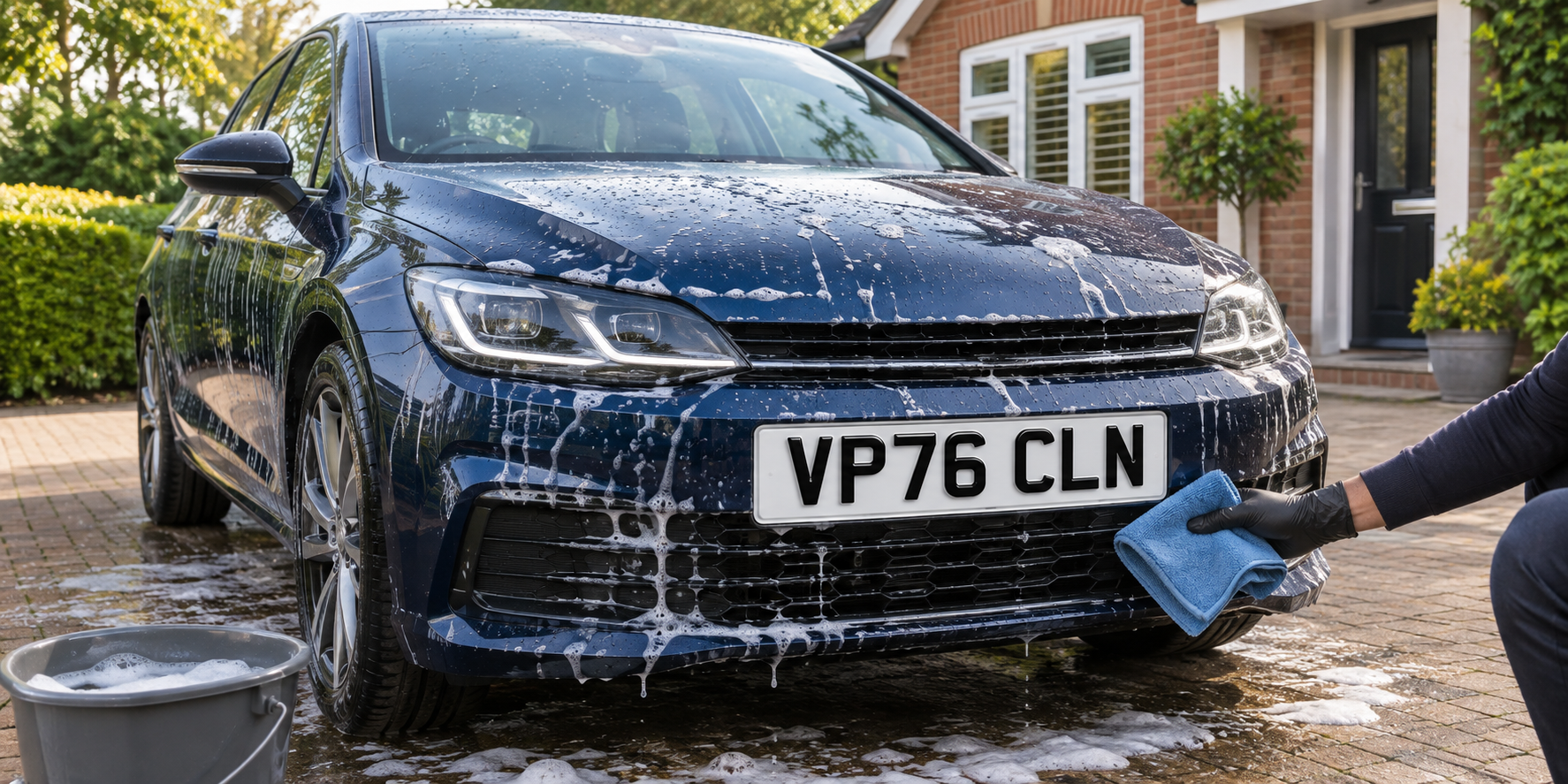
Let the plate cool before cleaning
Wash the plate when the vehicle is cool and out of strong direct sun where possible. A hot reflective face can dry shampoo quickly, leaving marks and encouraging extra rubbing around raised characters.
Check the plate before adding water. Look for loose lettering, cracked acrylic, lifting gel, damaged corners or movement at the fixings. Cleaning should not be used to press a failing character back into place; stop and assess the damage first.
- Choose a cool plate and shaded position.
- Check every character before washing.
- Look for cracks, lifting and loose fixings.
- Do not scrub a character that is already moving.
Rinse away grit before touching the face
Use clean water to remove loose dust, road grit and insects before wiping the plate. Start at the top and let the water carry dirt away rather than dragging particles across the reflective surface.
For ordinary washing, use a clean microfibre cloth or soft wash mitt with a mild car shampoo. Work lightly across the flat face, then around the edges of each raised character. Avoid abrasive pads, scouring powders and sharp tools that can scratch the background or mark the lettering.
- Pre-rinse loose dirt thoroughly.
- Use a clean, soft cloth or mitt.
- Work gently around raised edges.
- Keep abrasive products and tools away.
Take care with pressure washers and chemicals
A pressure washer can concentrate force into the edge of a raised letter, a drilled hole or a layered plate. Use a broad fan from a sensible distance and keep it moving; never hold a close jet against the lettering, plate edge, fixings or any area that is lifting.
Avoid strong solvents, adhesive removers, wheel cleaners, cutting compounds and polishes on the plate unless their maker confirms they are suitable for its materials. These products can haze the reflective face, soften adhesive or leave residue around gel and acrylic characters. Hand washing is the safer choice when compatibility is uncertain.
- Use a broad moving spray, not a close pencil jet.
- Do not aim pressure at character edges or holes.
- Keep harsh cleaners and polish off the plate.
- Choose a gentle hand wash if unsure.
Rinse, dry and inspect the details
Rinse away all shampoo from the plate face, character edges, badge, border and holder. Dry it with a separate clean microfibre towel using light pressure, then check that no fibres, wax or dressing remain around the registration or lower markings.
View the plate straight on and from both corners. Confirm that every letter and number is clear, the white or yellow background remains clean and reflective, and the plate is still secure. Check again after the next drive if any fixing or character seemed questionable during cleaning.
- Remove shampoo from every raised edge.
- Dry with a clean towel and light pressure.
- Keep wax and dressing off the reflective face.
- Recheck security after cleaning.
Know when cleaning is no longer enough
The Highway Code says number plates must be kept clean and clear. The current DVSA MOT manual also says a plate must not be obscured, excessively damaged, deteriorated or delaminated, and its registration must remain legible.
GOV.UK permits raised characters, but the complete road-use plate still needs the correct reflective background, character appearance and required markings. Replace rather than repeatedly scrub a plate with permanent staining, deep scratches, delamination or lettering that will not remain secure. Official guidance checked on 6 November 2026.
- Read the registration before driving.
- Replace a plate that remains unclear after cleaning.
- Do not cover damage with film or tint.
- Choose Road Legal in the builder for a road-use replacement.
- Prepare the required identity and entitlement documents.