
Where should a number plate be fitted? Position, angle and visibility checks
Check the correct end of the vehicle, keep the plate upright and visible, avoid obstructions and complete a secure post-fitting inspection.
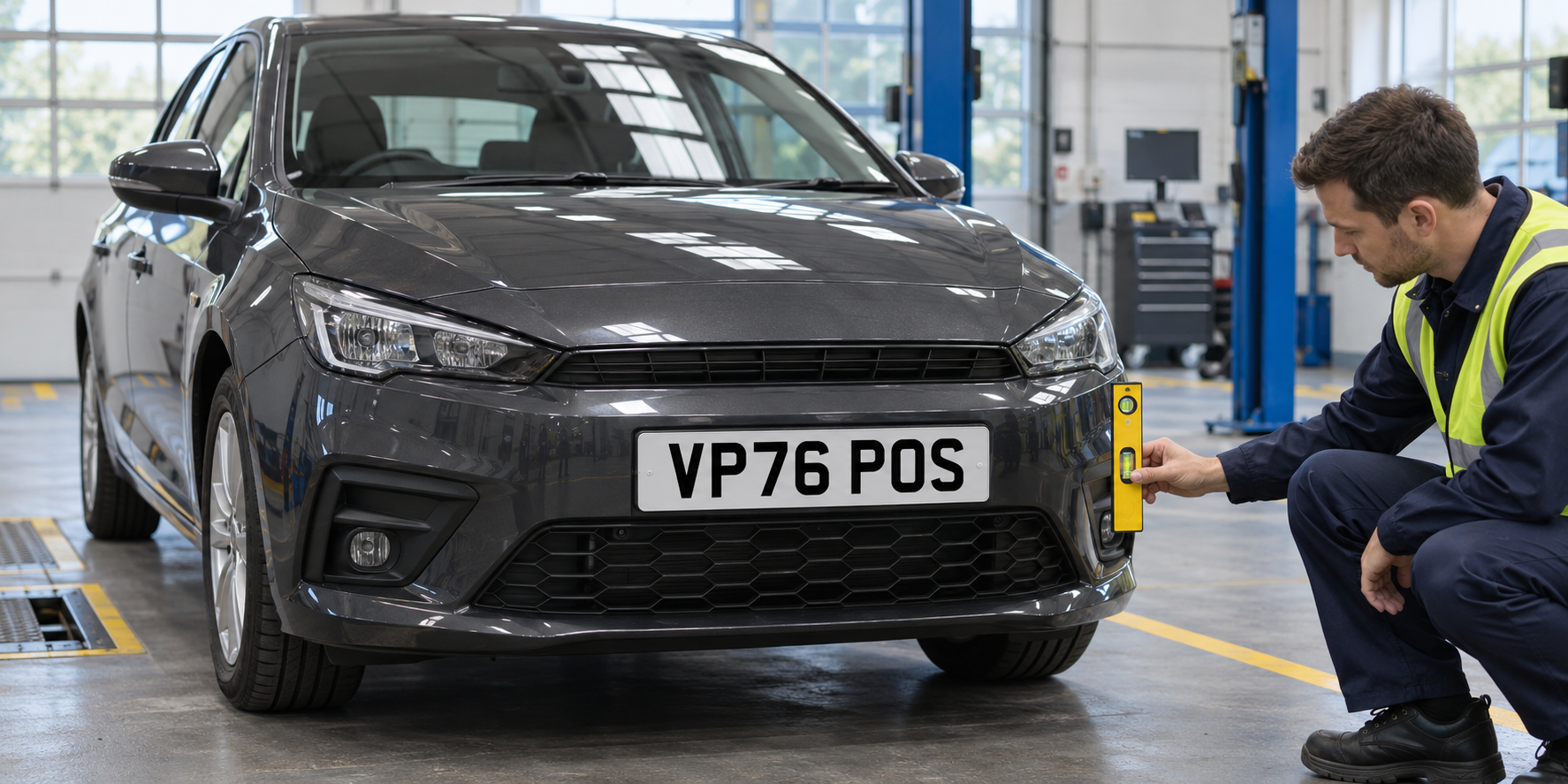
Fit the correct plate at the correct end
For most modern cars and vans, the front of the vehicle needs a white plate and the rear needs a yellow plate, both showing the same registration. Start with the intended front or rear mounting area rather than choosing a convenient piece of trim.
Motorcycles and some motor tricycles have different front-plate rules, so use the vehicle-specific guidance before fitting one. When towing, separate rules determine which registration is shown at the rear of the trailer.
- Use white at the front and yellow at the rear.
- Match the registration at both ends.
- Check motorcycle and trailer rules separately.
- Photograph each mounting area before removing an old plate.
Keep the plate upright
Current UK display regulations require front and rear plates to be fitted vertically or, where that is not reasonably practicable, as close to vertical as is reasonably practicable. Avoid a position that points sharply towards the road or sky simply to follow a bumper curve.
Use the vehicle's intended recess, plinth or a suitable holder where available. Check the angle from the side before tightening or bonding the plate, and do not force a rigid plate around a pronounced curve to make it follow the bodywork.
- View the plate from the side.
- Use a flat mounting surface or suitable plinth.
- Do not twist or bow the plate.
- Check the final angle before the fixings set.
Protect the full sightline
The rules require the registration characters to be easily distinguishable in normal daylight. The legislation does not create a general styling rule that every plate must sit exactly in the visual centre of a bumper, but any chosen position still has to meet the front or rear visibility requirement.
Stand directly ahead of or behind the vehicle, then move across both corners. The complete registration should remain clear of grilles, splitters, bodywork, tow points, steps, handles, cameras and accessories. Recheck after fitting a bike carrier, tow bar or other rear attachment.
- Read the complete registration straight on.
- Repeat the check from both corners.
- Keep trim and accessories away from the plate face.
- Do not tuck the plate into a deep recess that hides an edge.
Use secure fixings without changing a character
Use suitable existing mounting points where possible and follow the holder, pad or screw instructions. Keep screws, caps, clips and holder edges away from every letter and number as well as the required lower markings.
The current DVSA MOT manual lists a plate that is missing or insecure enough to be likely to fall off as a major defect. It also says a feature or fixing must not change the appearance or legibility of a character. Check for movement at every corner without flexing the plate.
- Use suitable mounting points and components.
- Keep fixings clear of the registration.
- Do not overtighten against an uneven surface.
- Check holders and clips are fully engaged.
Complete the final walk-round
Read the registration character by character at both ends and confirm the plate colour, position, angle and security. Make sure nearby doors, tailgates, boot lids and access panels can move without striking it, and check that no protective film, polish or fitting residue remains.
Inspect the plate again after the first journeys and washes for movement, lifting adhesive, cracked clips or stress around drilled holes. If the existing position cannot provide a flat, secure and visible fit, ask an experienced fitter to assess the mounting area before drilling or ordering a different size. Choose Road Legal in the Vista builder for a public-road replacement. Official guidance checked on 3 November 2026; the current DVSA MOT manual was updated on 14 October 2026.
- Check both plates from several viewing positions.
- Test nearby moving panels.
- Reinspect the fixings after early journeys.
- Replace damaged mounting parts promptly.
- Use current official guidance for road use.