
Number plate rattling or vibrating: holder and fixing checks
Find the source of a rattling plate, inspect holders, pads and screws, and refit it securely without cracking the plate or obscuring the registration.
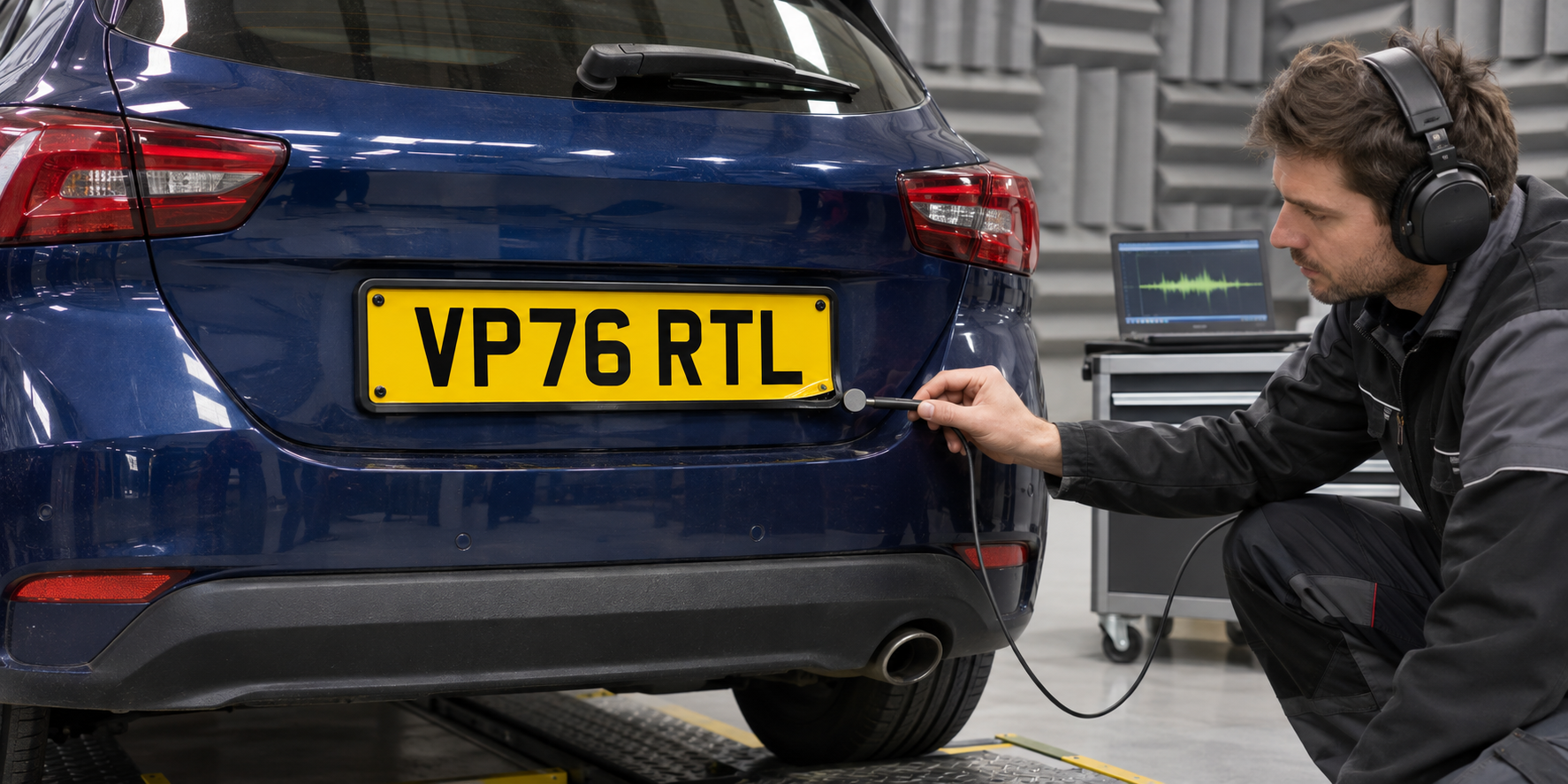
Confirm the noise comes from the plate
Park safely, switch the engine off and press each corner of the plate gently. Tap the plate, holder and mounting plinth separately, then open and close the tailgate or boot to see which part moves. A buzz from nearby trim, a reversing camera or the tailgate latch can sound like a loose plate.
Do not continue driving to reproduce the noise if the plate is visibly loose. Check whether the complete plate moves at its fixings, whether it is touching the bodywork, and whether a holder edge or clip has lifted.
- Test the plate only while the vehicle is parked.
- Check the plate, holder and mounting plinth separately.
- Listen at each corner and along the lower edge.
- Stop using the vehicle if the plate could detach.
Inspect every fixing point
Look for loose screws, missing caps, cracked screw holes, broken holder clips, failed adhesive pads and a warped mounting plinth. Dirt trapped between the plate and holder can also create a vibration point. Photograph the original arrangement before removing anything so the registration position and fixing locations are recorded.
Check the plate face and edges for cracks, delamination or damage around the holes. If the plate has been forced into a curved recess, one corner may spring away from the mounting surface even when the fixings appear tight.
- Inspect all four corners in good light.
- Replace broken clips rather than relying on the remaining ones.
- Remove old adhesive fully before fitting new pads.
- Replace a cracked or delaminated plate.
Do not solve the rattle by overtightening
Tightening a screw harder can crack the plate, pull a fixing through the holder or distort the plate's layers. Use the correct screw, washer, cap or holder clip for the mounting system and tighten only enough to hold the plate securely. Replace a damaged holder or fixing instead of forcing it to grip.
Do not put foam, tape or cable ties across the plate face. Fixings and holder edges must not change the appearance or legibility of any character, and the supplier and British Standard information at the bottom must remain visible.
- Support the plate evenly instead of clamping one corner.
- Keep screws and caps clear of every character.
- Keep tape and cable ties off the plate face.
- Follow the holder or fixing manufacturer's instructions.
Refit for even support
Dry-fit the plate and check that it sits upright, flat and fully within the holder or mounting area. For adhesive pads, clean and dry both suitable surfaces and distribute the pads so the plate is supported without rocking. For screws, use suitable existing mounting points where possible and keep the holes clear of the registration and required markings.
A holder must match the plate size and retain every edge correctly. If the bumper or tailgate is curved, use a compatible plinth or holder rather than bending the plate sharply. After fitting, press each corner and close the tailgate or boot several times to confirm that the movement and noise have gone.
- Dry-fit before drilling or exposing adhesive.
- Support the plate across its width.
- Keep the complete registration unobstructed.
- Recheck the mounting after early journeys and washes.
Complete a security and MOT check
Stand behind the vehicle and make sure the whole registration is easy to distinguish, the yellow rear background is visible and no fixing changes a character. Current GOV.UK rules require a modern number plate to use reflective material and the correct black-on-white front or black-on-yellow rear combination, with the supplier and applicable British Standard markings.
The current DVSA MOT manual lists a missing plate, or one so insecure that it is likely to fall off, as a major defect. DVSA defines insecure as relative movement at the point of fixing where there should be none. If the plate, holder or mounting surface still moves after your checks, have the fitting repaired before driving. Official guidance checked on 13 November 2026; the current manual was updated on 14 October 2026.
- Check every corner for unwanted movement.
- Read the registration straight on and from both sides.
- Keep the plate upright and fully visible.
- Repair the mounting before driving if it remains insecure.