
Faded number plates: cleaning, colour and replacement checks
Tell surface dirt from lasting colour deterioration, check the plate in daylight and know when a replacement is the better option.
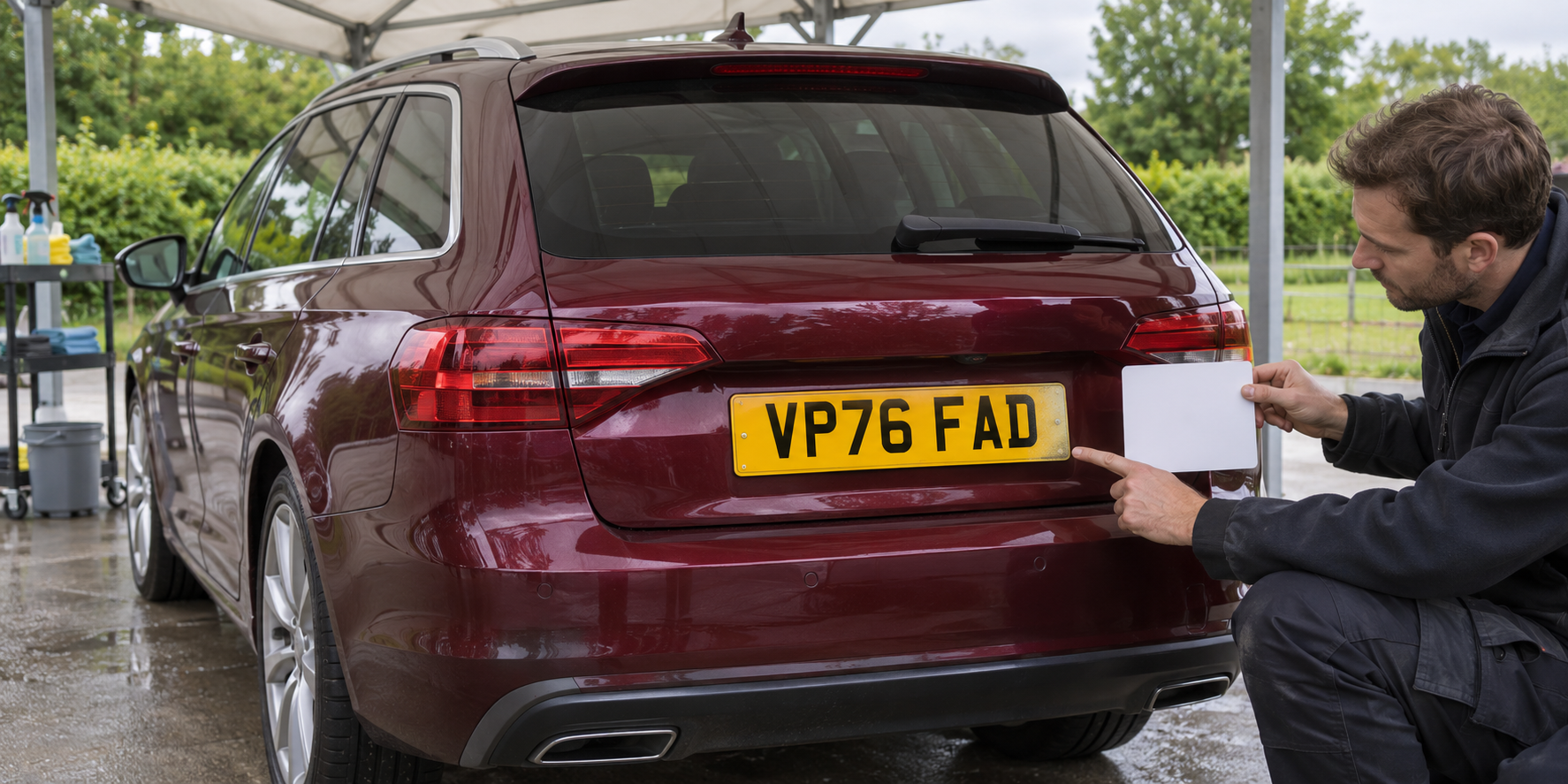
Clean the plate before judging its colour
A layer of traffic film, salt, wax or dried shampoo can make a plate look dull without the material itself being faded. Rinse away loose grit, wash the face gently with water and mild car shampoo, then dry it with a clean microfibre cloth. The Highway Code says number plates must be kept clean and clear.
Avoid abrasive pads, strong solvents and aggressive polishing. These can mark the face, damage raised lettering or make an existing problem worse. Let the plate dry fully before inspecting it so water streaks do not look like colour loss.
- Rinse before wiping the face.
- Use mild shampoo and a soft cloth.
- Let the plate dry completely.
- Keep abrasives and solvents away.
Inspect the background, characters and edges
Check the complete plate in bright, even daylight. A modern front plate should have black characters on a white reflective background, while the rear should have black characters on a yellow reflective background. Look for uneven bleaching, grey or cloudy patches, a washed-out outer edge, lifting layers and characters that no longer appear consistently black.
Compare the front and rear separately rather than expecting their colours to match. Check around screw holes, holder clips, badges and borders, then make sure the supplier and British Standard markings remain present and legible. Photograph the plate straight on if you need to compare the condition later.
- View the plate straight on and from both corners.
- Check the face, edges and fixing points.
- Read every character in normal daylight.
- Keep a clear condition photograph.
Know what the MOT inspection looks for
The current DVSA MOT manual says registration plates must not be obscured, excessively damaged, deteriorated or delaminated. It also requires the correct background colours for the relevant vehicles and lists an illegible inscription or a plate that does not conform to the specified requirements as a major defect.
An MOT result is not a home test for reflectivity, and a plate does not need to become unreadable before you investigate it. Treat lasting colour change, clouding or surface breakdown as a condition issue, especially when it affects the registration, the reflective background or the required markings.
- Do not wait for every character to disappear.
- Check colour and legibility together.
- Look for deterioration as well as dirt.
- Ask an MOT station or plate supplier if the condition is unclear.
Do not try to recolour the plate
Paint, marker pen, coloured film and restorative coatings do not return a number plate to its tested construction or reflective performance. They can also introduce a pattern, alter the background or characters, hide required markings and make identification harder.
If cleaning does not restore an even, clear face, replace the affected plate instead of disguising the deterioration. Use a registered supplier and have the required identity and entitlement documents ready. Choose a white Front plate or yellow Rear plate deliberately, then copy the registration exactly.
- Do not paint the yellow or white background.
- Do not darken characters with marker pen.
- Keep films and coatings off the plate face.
- Replace a plate that remains faded after cleaning.
Measure, order and fit the replacement carefully
Measure the existing plate and the usable mounting area before changing the size or shape. Check the registration, plate position, lettering, badge, border and fixings in the Vista builder, and choose Road Legal for a replacement intended for public-road use.
Dry-fit the replacement before drilling or exposing adhesive. Keep it upright, secure and fully visible, with every fixing clear of the characters and lower markings. Recheck the plate after early journeys and washes, and clean it regularly before contamination becomes difficult to remove. Official guidance checked on 11 November 2026; the current DVSA MOT manual was updated on 14 October 2026.
- Measure before choosing another size.
- Select Front or Rear correctly.
- Keep fixings clear of the registration.
- Check security and visibility after fitting.