
UK number plate fonts: standard lettering and MOT checks
Learn which lettering style UK road-use number plates need, what an MOT checks and how raised characters affect the finished design.
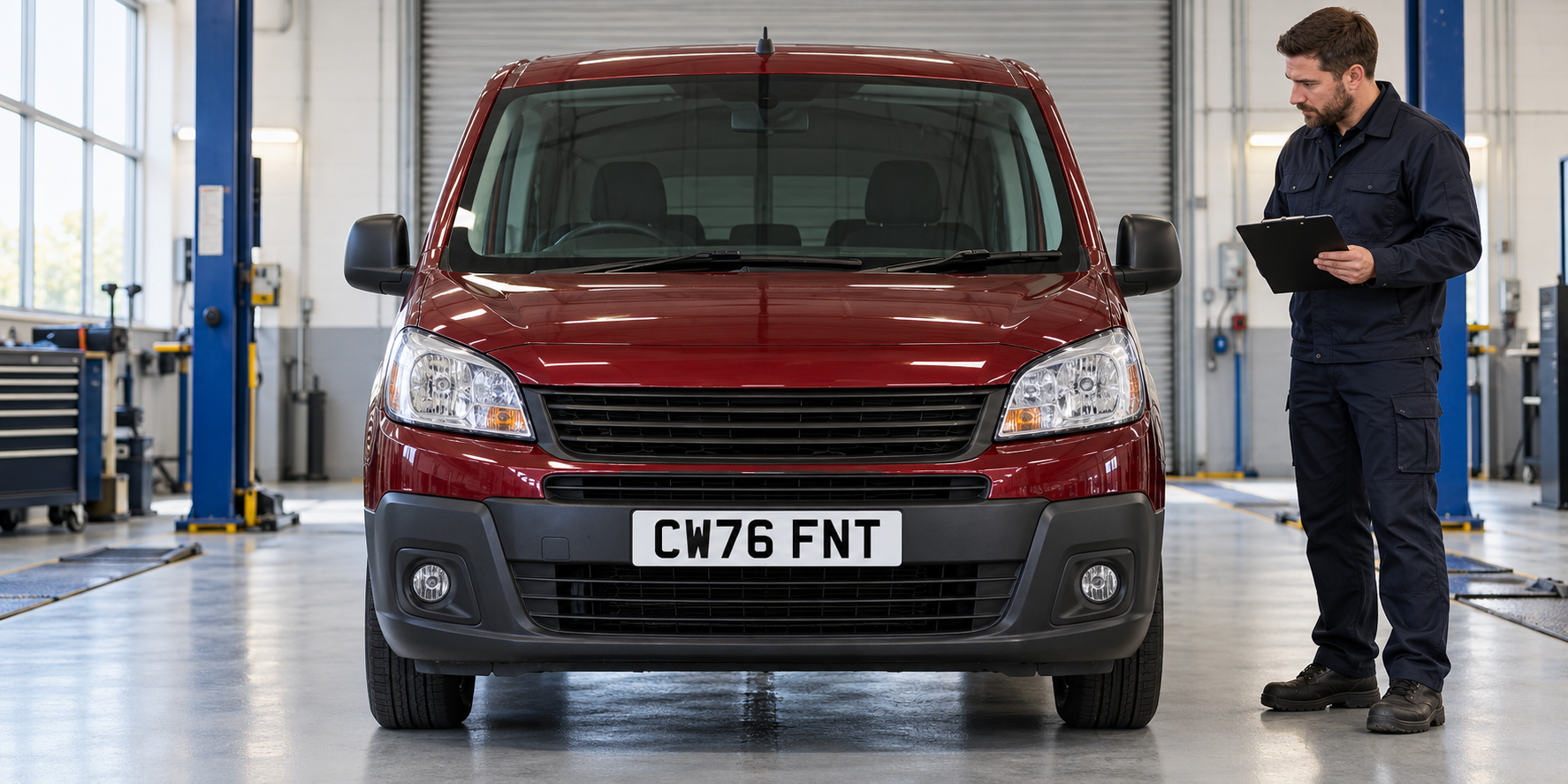
Road-use plates use a standard lettering style
The registration is a vehicle identifier, so its letters and numbers need to be quick to recognise. DVLA leaflet INF104 says a standard font was introduced on 1 September 2001, ending the use of italics and other hard-to-read lettering styles on new or replacement plates.
The current DVSA MOT manual describes the requirement as the prescribed font, or one that is substantially similar to it. Decorative scripts, compressed novelty lettering and altered character shapes are not suitable choices for a road-use plate.
Know what the MOT examiner checks
An MOT examiner checks that the characters are the correct size, stroke width and spacing, and that the registration is laid out in the correct format for the vehicle's age. The characters must not be italic, sloping or made from broken or multiple strokes.
The manual says examiners do not have to physically measure the lettering and should reject it when it is obviously incorrect. That is an inspection instruction, not permission to depart from the required dimensions. INF104 gives the measurements for modern car plates, motorcycle plates and older formats.
Raised characters still need the right shape
GOV.UK allows 3D raised characters, but their depth does not replace the lettering rules. A 3D gel or 4D character should still form the correct complete letter or number, with the required layout and a clear black face.
For plates fitted to vehicles first registered on or after 1 September 2021, the MOT manual says the entire surface of a raised character, including its sides, must be a single shade of black. The rest of the plate must also meet the rules for its reflective background, colours and required markings.
Use the Vista preview as an ordering check
Choose Road Legal in the Vista builder when the plate will be used on a public road. For recognised UK formats, the builder arranges the standard registration spacing automatically; Vista confirms the final typeface, size and production markings before manufacture.
Choose Show Plates only for display use. Show Plates keep the spacing you enter and are not for use on public roads. Whichever mode you choose, compare every letter and number with your entitlement document before adding the plate to your basket.
Complete a final lettering review
Read the preview from left to right and look closely at characters that can be confused, such as B and 8, O and 0, or I and 1. Then check the plate position, size, lettering finish, badge, border and fixings. No screw, cap or holder should change a character's appearance.
For a pair, inspect both the white front and yellow rear previews. If you are matching an existing plate, compare the finish using the product photographs rather than relying on a style name alone. Official guidance checked on 15 October 2026; the DVSA MOT manual was updated on 14 October 2026.
- Use the Road Legal setting for plates intended for public roads.
- Avoid italic, sloping, broken or multi-stroke lettering.
- Check the full character shape as well as its finish.
- Keep screws and holders clear of every character.
- Compare every character with your entitlement document.