
Number plates on curved bumpers: measuring and fitting guide
Measure an awkward bumper or recess, keep the plate flat and readable, and choose a secure mounting method without forcing the acrylic.
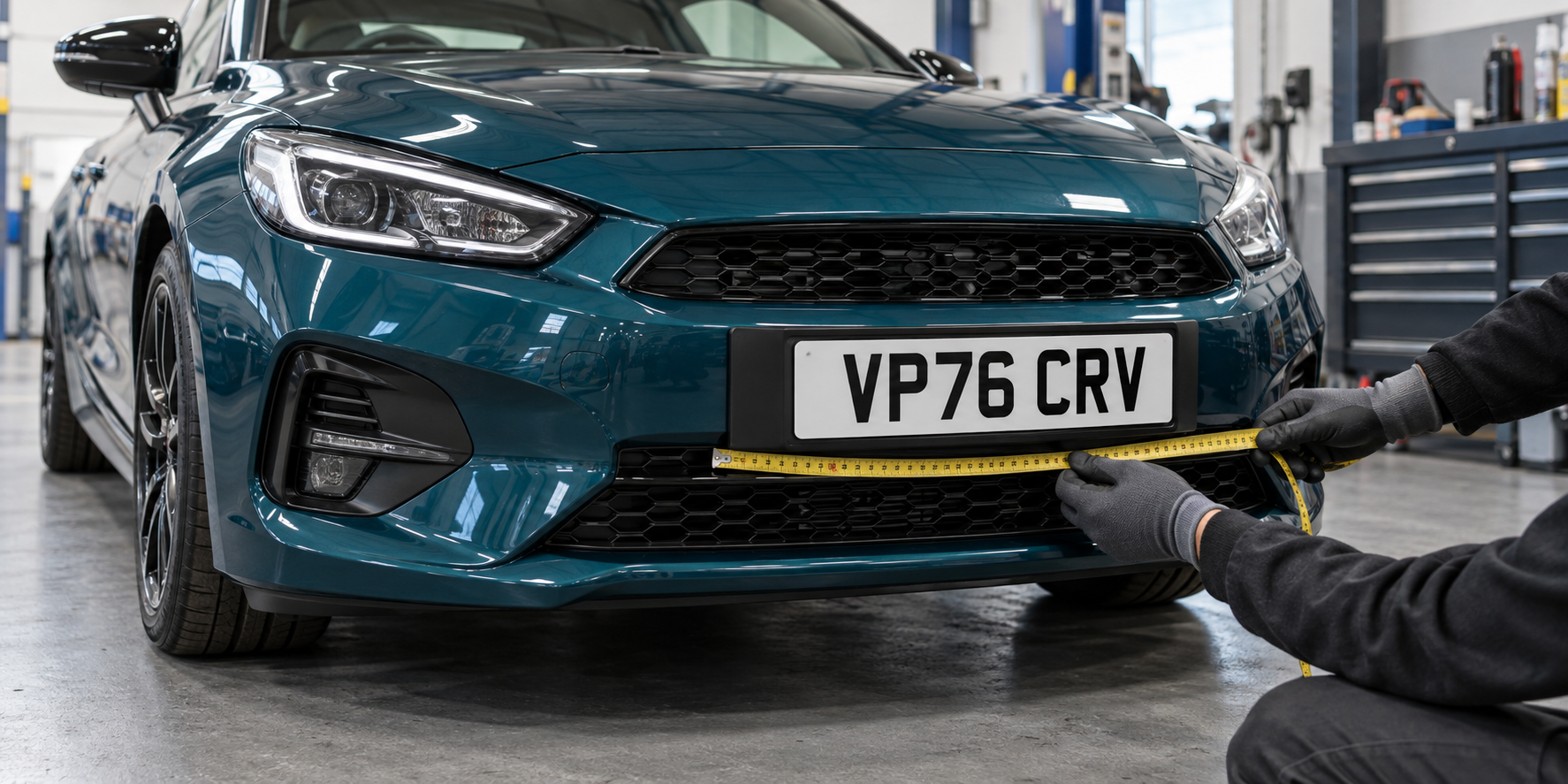
Measure the usable area, not the bumper width
A bumper may look wide enough while its actual plate area is interrupted by curves, grilles, sensors, trim or old fixing holes. Measure the flat usable width and height in millimetres, then note where the surface starts to turn away from the plate.
Check the front and rear separately. Photograph each mounting area straight on and from the side, and measure inside any existing holder or plinth rather than using only the outside dimensions. The old plate is a useful reference, but it does not prove that its size or fitting method was suitable.
- Record the flat width and height.
- Mark where the bumper curve begins.
- Check grilles, sensors, lamps and trim.
- Measure the inside of any holder.
- Inspect front and rear mounting areas separately.
Keep the plate flat instead of forcing the acrylic
Do not pull a rigid plate around a pronounced bumper curve or tighten one side until the plate twists. Forced bending can place stress around holes, corners, laminated layers and raised characters, and it can leave the registration facing different directions across the plate.
Where the bumper is curved, use the vehicle's intended mounting points or a suitable flat plinth or holder designed for that location. Follow the vehicle, holder and fixing manufacturers' instructions. If no suitable flat mounting area is available, ask an experienced fitter to assess the bumper before drilling or bonding anything.
Keep the finished registration upright and visible
Current UK display regulations require front and rear plates to be fitted vertically, or as close to vertical as is reasonably practicable, and positioned so the characters are easily distinguishable in normal daylight. A shaped bumper does not remove that visibility requirement.
Stand directly in front of the finished plate, then check it from both front corners. The complete registration should remain easy to read without bodywork, trim, a tow point or another attachment crossing the characters. Do not tuck the plate deeply into a recess simply to hide its edge.
- Check the plate from straight ahead and both corners.
- Keep every character clear of bodywork and trim.
- Avoid a position that points sharply up or down.
- Make sure the complete plate face remains visible.
Choose fixings that suit the mounting surface
Use suitable existing mounting points where possible. If using a holder, confirm that its clips retain the plate without pressing on raised lettering or covering the lower markings. If using adhesive pads or screws, follow their instructions and make sure the surface, temperature and hole positions are suitable.
The current DVSA MOT manual says a plate missing or so insecure that it is likely to fall off is a major defect. It also says a fixing must not change the appearance or legibility of a character. Keep screws, caps, clips and holder edges away from every letter and number, and do not overtighten a plate against a curve.
- Use the intended vehicle mounting points where available.
- Keep screws and clips clear of the registration.
- Check clearance around raised characters.
- Do not use tightening force to bend the plate.
- Test for movement after fitting.
Do not solve a curve by altering the registration
A smaller or shorter plate is not automatically the answer to a curved bumper. The complete registration still needs the correct character style, size, spacing and margins for the vehicle and plate specification. Never squeeze the character groups together or choose a display layout simply to fit a difficult recess.
Enter the complete registration in the Vista builder before comparing sizes. Choose Road Legal for a plate intended for public-road use, then review the size options shown for that registration. If the mounting area is unusual, send Vista the measured width and height plus clear straight-on and side photographs before ordering.
- Enter the registration before selecting a size.
- Keep the prescribed spacing and layout.
- Choose Road Legal for public-road use.
- Ask for a fit check when the recess is uncertain.
Complete a post-fitting check
After fitting, read the registration character by character and check that the plate sits flat on its mount, remains secure and does not touch a sharp bumper edge. Open nearby doors, tailgates or access panels and make sure their movement cannot strike the plate.
Recheck the plate after the first journeys and after washing the vehicle. Look for movement, stress around holes, lifting adhesive, cracked clips or a plate beginning to bow. Replace a damaged or insecure mounting arrangement rather than adding another fixing across the registration. Official guidance checked on 30 October 2026; the current DVSA MOT manual was updated on 14 October 2026.
- Read the full registration after fitting.
- Check for movement and stress around fixing points.
- Make sure moving panels cannot touch the plate.
- Reinspect after the first journeys and washes.
- Replace damaged holders or fixings promptly.