
Moisture inside a number plate: delamination and replacement checks
Tell surface water from trapped moisture, inspect the plate without making the damage worse and know when replacement is the safer choice.
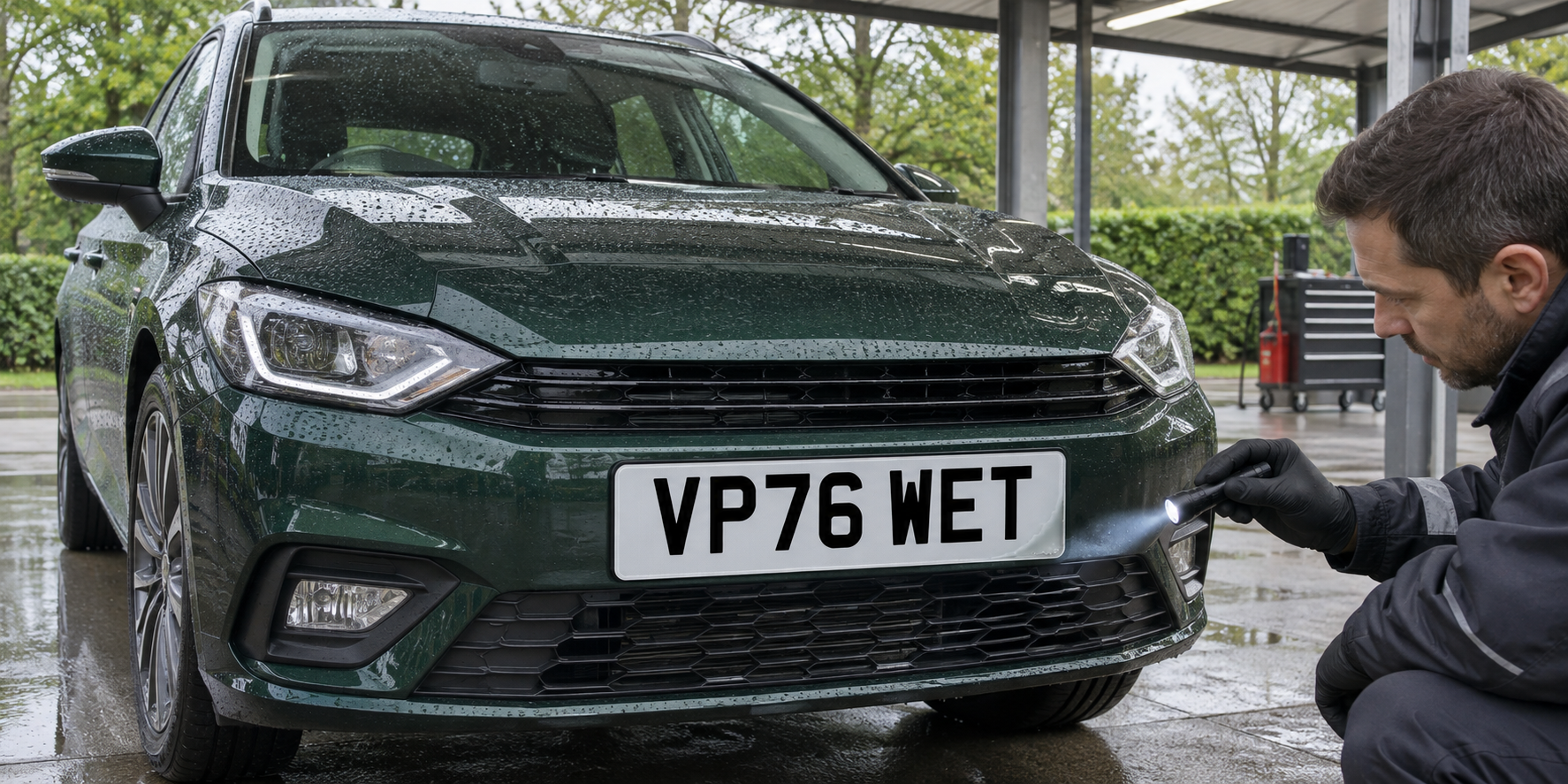
Dry the outside before judging the plate
Rinse away loose dirt, then dry the plate gently with a clean microfibre cloth. Surface rain, wash water and road film can create temporary patches that disappear when the face is clean and dry; trapped moisture remains beneath the visible surface.
Inspect the complete plate in bright, diffuse light from straight on and both corners. Look for a milky or cloudy area that cannot be wiped away, tiny droplets within a layer, a lifting edge or a patch that changes when gentle pressure is applied nearby. Do not press hard or flex the plate to prove the fault.
- Clean and dry the face first.
- Use bright, even light.
- View the plate from several angles.
- Photograph any patch before touching the fixings.
Check the edges, holes and mounting area
Examine every outer edge and any drilled hole for cracks, gaps, trapped dirt or separation between layers. Check whether a screw has been overtightened, a holder is pinching the plate or the mounting surface is forcing it around a curve.
Inspect the reverse and mounting area only if the plate can be removed safely without causing further damage. A clear photograph of the face, edge and fixing arrangement can help a supplier or fitter assess the problem. Check the other plate as well, but do not assume both need replacing if only one is affected.
- Look closely around every drilled hole.
- Check for bowing, pinching and stressed corners.
- Record the fitting arrangement before removal.
- Compare the front and rear conditions separately.
Avoid improvised drying and sealing
Do not drill a drain hole, split the layers, use a heat gun or bake the plate to drive moisture out. Avoid injecting sealant, running solvent around an edge or covering the face with a clear film. These methods can distort the plate, damage the reflective material or make the registration harder to identify.
Cleaning may remove dirt from the surface, but it cannot restore a reflective layer that has separated or become permanently cloudy. If the plate is still within a supplier or product guarantee, contact the supplier before modifying it and follow their evidence and return instructions.
- Do not add holes to release moisture.
- Keep heat and solvents away.
- Do not hide the patch with film or tint.
- Ask the supplier before altering a recent plate.
Know what the MOT check looks for
The current DVSA MOT manual says registration plates must not be obscured, excessively damaged, deteriorated or delaminated. It tells testers to pay particular attention to delamination because ANPR cameras can see non-reflective material as black, which may affect identification.
GOV.UK also requires modern number plates to be made from reflective material and to carry the applicable British Standard and supplier markings. A small edge patch should therefore be monitored rather than ignored; replace the plate when moisture or separation affects the characters, background, reflectivity, security or required markings. An illegible inscription or a plate that does not conform to the specified requirements is listed as a major MOT defect.
- Read every character in normal daylight.
- Check that the white or yellow background remains even.
- Keep supplier and standard markings visible.
- Replace a plate that is no longer clear, reflective or secure.
Order and fit the replacement carefully
Choose the correct vehicle position: white for the front or yellow for the rear. Measure the existing plate and usable mounting area before changing its size, then compare the registration, finish and required documents with the undamaged plate and your entitlement record.
When fitting the replacement, use a suitable flat mounting area, holder, pads or existing screw points. Keep fixings clear of every character and required marking, do not overtighten or force the plate around a tight curve, and follow the fixing instructions. Recheck the edges after the first journeys and washes, and keep close pressure-washer jets away from holes, edges and raised lettering. Official guidance checked on 9 November 2026; the current DVSA MOT manual was updated on 14 October 2026.
- Select Front or Rear deliberately.
- Measure before changing size or shape.
- Keep fixings clear of the registration.
- Support the plate without twisting it.
- Inspect the new plate after early journeys and washes.