
Tinted number plate covers, films and sprays: road-use checks
Understand why a tint, film, cover or spray must not obscure a UK registration, change its appearance or interfere with a clear photographic image.
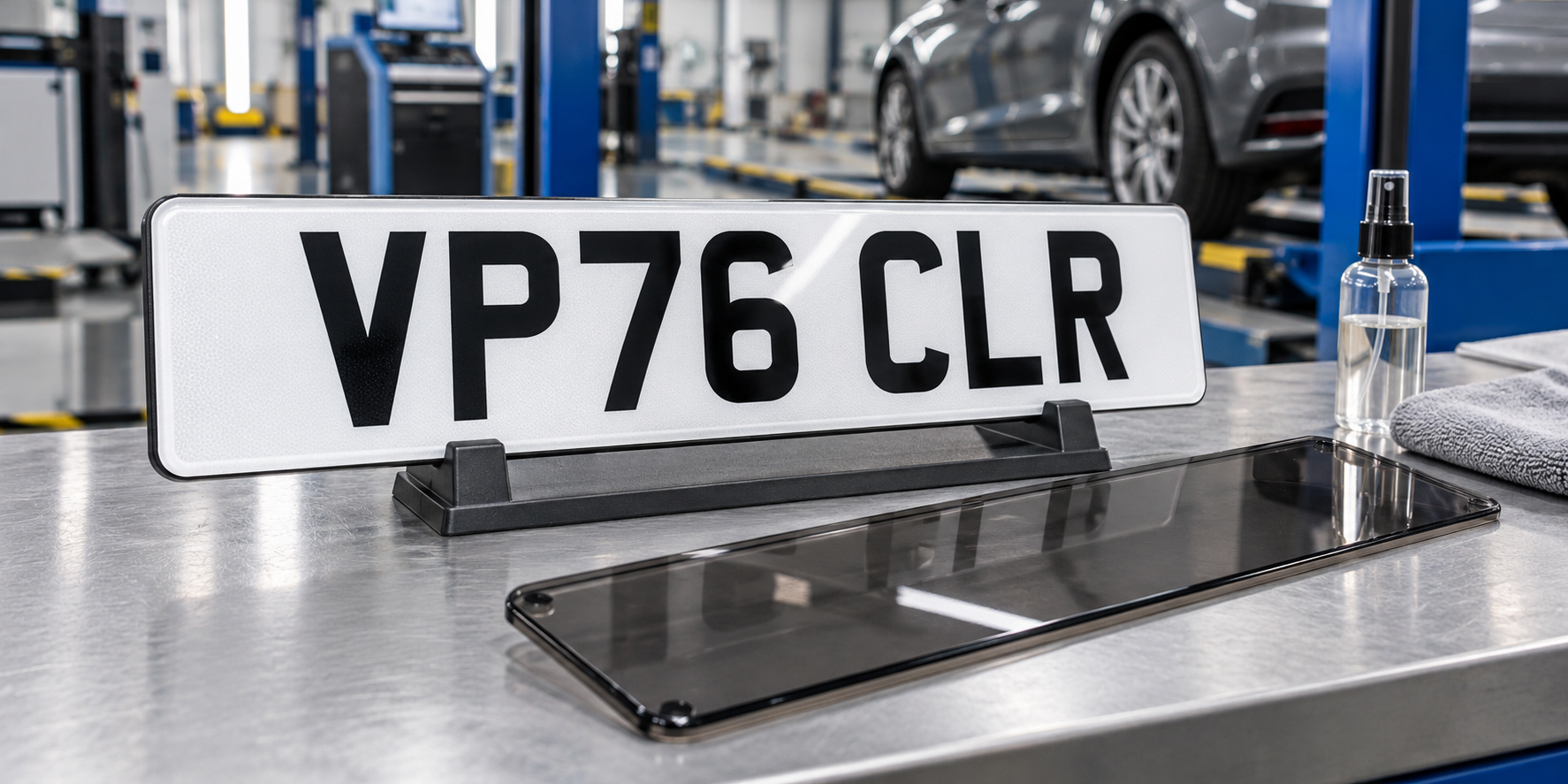
Start with the complete plate, not the accessory
A road-use number plate must remain easy to identify as a complete specification. Current GOV.UK guidance requires reflective material, black characters, the correct white front or yellow rear background, no background pattern, supplier identification and the applicable British Standard marking.
An accessory does not create an exemption from those requirements. Judge the fitted result in daylight and at night, straight on and from an angle, with the plate clean and the vehicle lamps operating normally.
- Read every character without glare or haze.
- Keep the white or yellow background clear.
- Check the supplier and standard markings remain visible.
- Inspect the plate with every accessory fitted.
Tints and films can create an MOT defect
The current DVSA MOT manual says a plate must not be obscured and must not have a feature or fixing that changes the appearance or legibility of any character, including the use of tints or films. A cover that looks lightly smoked in the hand can still darken the background, add reflections or reduce contrast when fitted.
Do not rely on a product name such as clear, road legal or camera safe. There is no separate road-use category for a tinted cover: the complete fitted plate still has to meet the display requirements and remain clearly readable.
- Check for darkening across the whole plate.
- Look for reflections over the characters.
- Inspect through the cover from both sides.
- Remove any tint or film that changes legibility.
Avoid sprays or treatments intended to defeat cameras
UK display regulations say a plate must not be treated in a way that makes the registration less easily distinguishable or prevents or impairs a true photographic image. That makes claims about defeating ANPR, speed cameras or flash photography a warning sign rather than a benefit.
A transparent-looking treatment may be difficult to assess by eye and can collect dirt or create an uneven surface. Keep car-care products off the reflective face unless they are intended for the plate material and do not leave a film; use mild car shampoo and water for routine cleaning.
- Do not apply camera-blocking treatments.
- Avoid wax, polish or dressing on the plate face.
- Rinse away residues after cleaning.
- Replace a plate whose surface has been permanently altered.
Check holders, fixings and clear covers too
Even an untinted cover or holder needs a fitting check. Its rim, clips, screws or trapped dirt must not cross a character or required marking, and condensation or scratches must not leave the registration difficult to read.
The DVSA manual also warns that fixings and non-reflective material can affect identification by ANPR cameras. Use suitable mounting points, keep all fixings clear of the registration and remove an accessory if it causes movement, damage, glare or an obstruction.
- Keep holder edges away from every character.
- Check for trapped water and road grime.
- Replace cracked, cloudy or loose accessories.
- Make sure the plate remains secure after removal.
Restore a clear road-use display
Remove any cover, film or treatment that changes the plate's appearance or legibility, then clean and inspect the plate in good light. Check for adhesive residue, scratches, delamination, fading and damage around fixing holes. Do not scrape or use a solvent that could harm the reflective surface or raised lettering.
If the plate cannot be restored without damage, order the correct replacement rather than hiding the problem with another cover. Choose Road Legal in the Vista builder for public-road use, copy the registration from the entitlement document and prepare the accepted identity and registration-entitlement evidence. Official guidance checked on 1 November 2026; the current DVSA MOT manual was updated on 14 October 2026.
- Remove the accessory before assessing damage.
- Clean gently and let the plate dry.
- Check the complete registration from several angles.
- Replace a plate that remains altered or unclear.
- Use the current official guidance before road use.