
Bike racks and number plates: keeping your registration visible
Check whether a rear-mounted bike rack hides your registration, lamps or reflectors, and prepare a clear carrier-mounted rear plate before travelling.
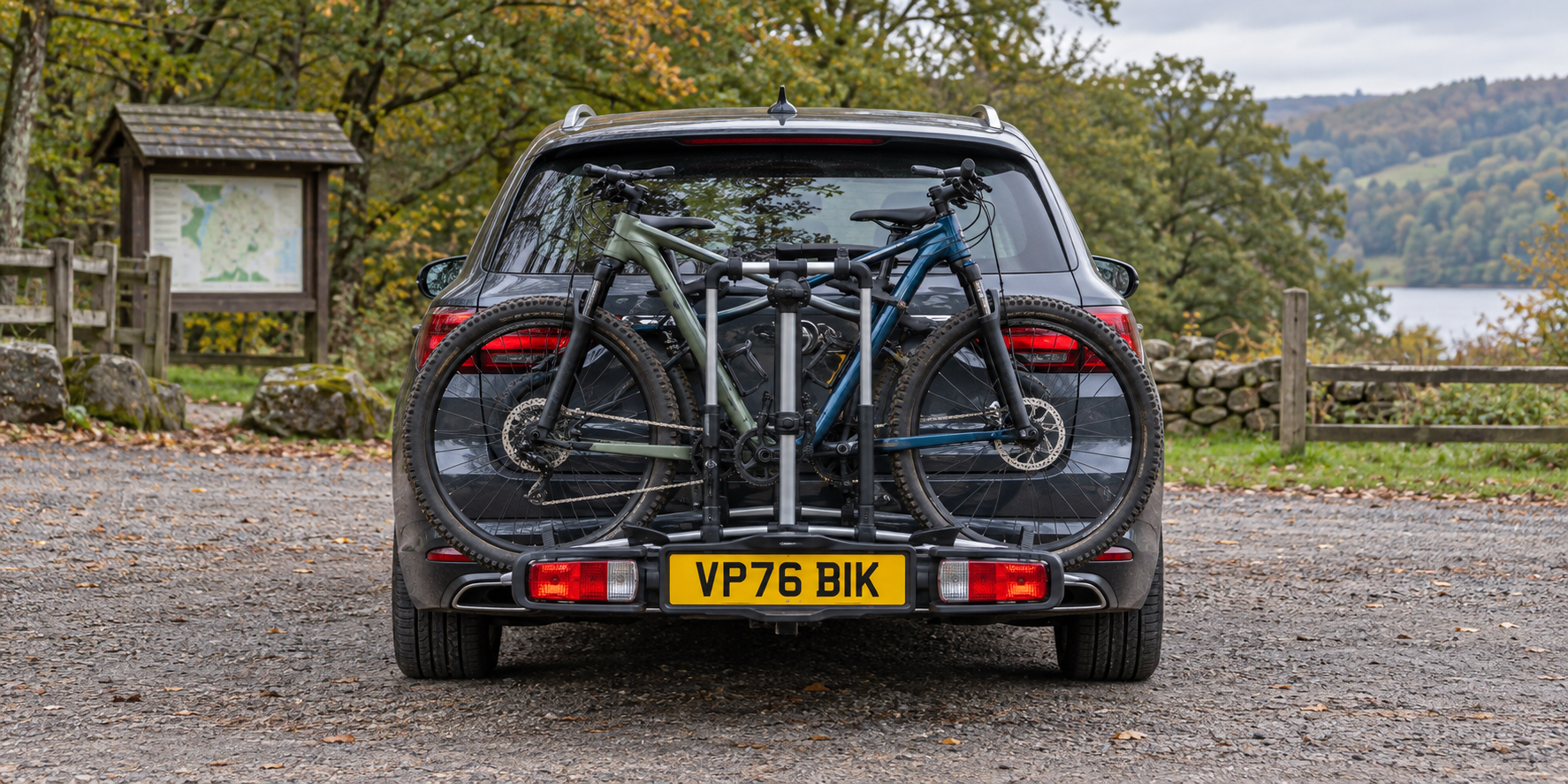
Check the loaded carrier from directly behind
Fit the bike rack and load the bicycles exactly as they will travel, then stand directly behind the vehicle. The Highway Code says that lights, indicators, reflectors and number plates must be kept clean and clear, so check the finished arrangement rather than the empty carrier.
Look for tyres, frames, straps and covers crossing any part of the registration. The current DVSA MOT manual says a plate that is obviously obscured by an object or attachment is a defect. If the vehicle's rear plate cannot be read clearly, resolve the obstruction before driving.
- Load every bicycle before checking visibility.
- Read the complete registration from directly behind.
- Check that straps cannot move across the plate.
- Repeat the check after adjusting the carrier.
Use a matching rear plate when the vehicle plate is hidden
A common solution is a separate rear number plate mounted securely on the carrier or its lighting board. It must show the same registration as the vehicle, with black characters on a yellow reflective background and the applicable road-use markings.
Do not rely on a handwritten board, printed paper or a registration displayed behind the rear window. Copy every character from the vehicle's registration record and keep the complete plate upright, unobstructed and within the carrier's intended mounting area.
Keep the rear lamps and reflectors visible
Bicycles and carriers can also cover the vehicle's tail lamps, indicators or reflectors. Check each one with the carrier loaded. Where the original equipment is obscured, use a suitable connected lighting board and follow the carrier and vehicle manufacturers' fitting instructions.
The DVSA MOT manual says rear registration plate lamps must illuminate the rear plate and operate with the position lamps. After connecting a lighting board, test its tail lamps, indicators, brake lamps and plate lamp before setting off, then check that no cable can drag or become trapped.
- Test both indicators and the hazard warning lamps.
- Check the tail, brake and registration plate lamps.
- Keep every reflector fully visible.
- Secure the electrical cable away from the road and moving parts.
Measure the lighting board or plate holder
Measure the usable plate area on the carrier or lighting board, including the inside of any holder. Allow for retaining clips, lamps, plugs and curved edges, and make sure the plate can sit flat without being bent or forced behind a bicycle wheel.
A standard car rear plate is often the simplest choice when the board is designed for it, but measure before ordering. If the mounting area is unusual, compare its width and height with the available plate sizes and make sure the complete registration can retain the correct character layout and spacing.
Order and complete a pre-journey check
Road-use number plates must be made by a registered supplier. GOV.UK says the supplier needs original documents proving your name and address and your entitlement to use the registration, so prepare the accepted documents before ordering a carrier plate.
In the Vista builder, choose Road Legal and Rear, copy the registration from the entitlement document and review the size, lettering and fixings. Once fitted, load the bicycles and check the registration, lamps, reflectors, straps and carrier security in daylight and with the position lamps switched on. Official guidance checked on 27 October 2026.
- Choose a yellow rear plate for the carrier.
- Copy the registration from the entitlement document.
- Measure the holder before choosing a size.
- Check the loaded carrier before every journey.
- Recheck straps and visibility at safe stops on a longer trip.