
Van number plates: sizing, rear-door fitting and daily checks
Measure a van's front and rear mounting areas, keep the rear plate and lamps clear, and add number plates to a practical walkaround check.
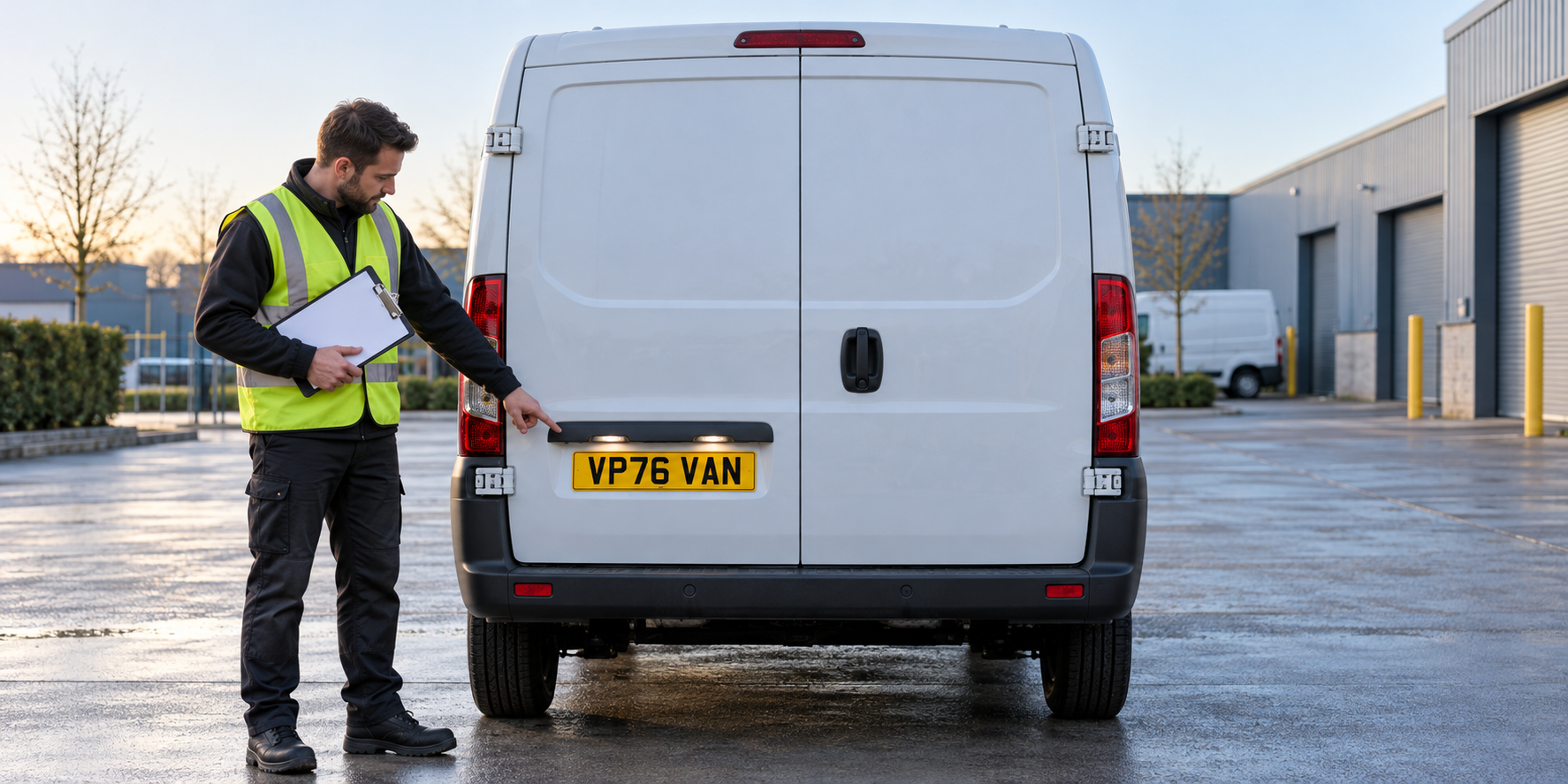
Vans follow the same core display rules
A light commercial van needs a front and rear registration plate showing the same registration. For a modern vehicle, GOV.UK requires black characters on a white reflective front plate and a yellow reflective rear plate, with no background pattern and the required supplier and British Standard markings.
The body style does not relax the character, spacing or visibility requirements. Copy the registration from the vehicle record and choose a road-use specification before considering a short, shaped or raised-lettering option.
- Match the registration at both ends of the van.
- Use white at the front and yellow at the rear.
- Keep the prescribed spacing and character style.
- Check the supplier and British Standard markings.
Measure the front and rear separately
Measure the flat usable area on the front bumper and rear door or tailgate in millimetres. Note moulded recesses, curves, hinges, handles, steps, cameras, parking sensors, lamps and existing holes rather than relying only on the outside size of an old plate.
Rear double doors often have an offset factory recess, while the front bumper may be wider and flatter. The two positions can therefore need separate fitting decisions even when you are ordering a pair. Do not reduce or re-space the registration simply to force it into an unsuitable area.
- Record width and height for each mounting area.
- Check both rear doors can open normally.
- Keep cameras, handles and lamps clear.
- Measure the inside of any plate holder.
Keep the rear plate and its lamps clear
Fit the rear plate in the intended mounting area, upright or as close to vertical as reasonably practicable, and make sure the complete registration is easy to distinguish. A door handle, tow bar, step, load, ladder or accessory must not obscure the plate.
The current DVSA MOT manual says rear registration plate lamps must illuminate the rear plate and operate with the position lamps. After bodywork, a door replacement or a conversion, check that the plate remains in the lit area and that both rear doors, hinges and latches can move without touching it.
- Switch on the position lamps and inspect the rear plate.
- Check that every character is evenly visible.
- Open both rear doors and watch the plate clearance.
- Recheck after fitting a tow bar or rear accessory.
Choose fixings for a working vehicle
Vans can experience frequent door movement, loading activity and road vibration, so the plate and any holder need to remain secure. Use the vehicle's suitable mounting points or a fixing system intended for the surface, and follow the fixing manufacturer's instructions.
Keep screws, caps, clips and holder edges away from the registration characters and required lower markings. The DVSA manual lists a missing plate, or one insecure enough to be likely to fall off, as a major defect. Replace cracked clips, loose pads or damaged holders rather than relying on a partial fixing.
Include the plates in the van walkaround
DVSA's van walkaround guidance says to check that number plates are the correct type, secure and easily read. Add a quick front-and-rear plate check before the vehicle leaves: wipe away dirt, read every character and look for cracks, delamination or movement.
For a replacement, choose Road Legal in the Vista builder, select Front, Rear or Pair, and review the size, lettering and fixings. A registered supplier will need original evidence of your name and address and entitlement to the registration. Official guidance checked on 28 October 2026.
- Read both plates before the first journey.
- Clear road grime without using abrasive tools.
- Check the rear plate lamp with the position lamps on.
- Report a loose, damaged or unreadable plate.
- Prepare the accepted documents before ordering a road-use replacement.